
Ocean Giants
There are moments in travel that refuse to fade. They arrive unexpectedly, imprinting themselves not only on memory but on the rhythm of breath. One of those moments is to slip into the Maldivian sea and find yourself alongside a creature so vast, so otherworldly, that time seems to slow. The whale shark and the manta ray, two of the ocean’s most spellbinding giants, are among the greatest gifts of a Maldivian journey.
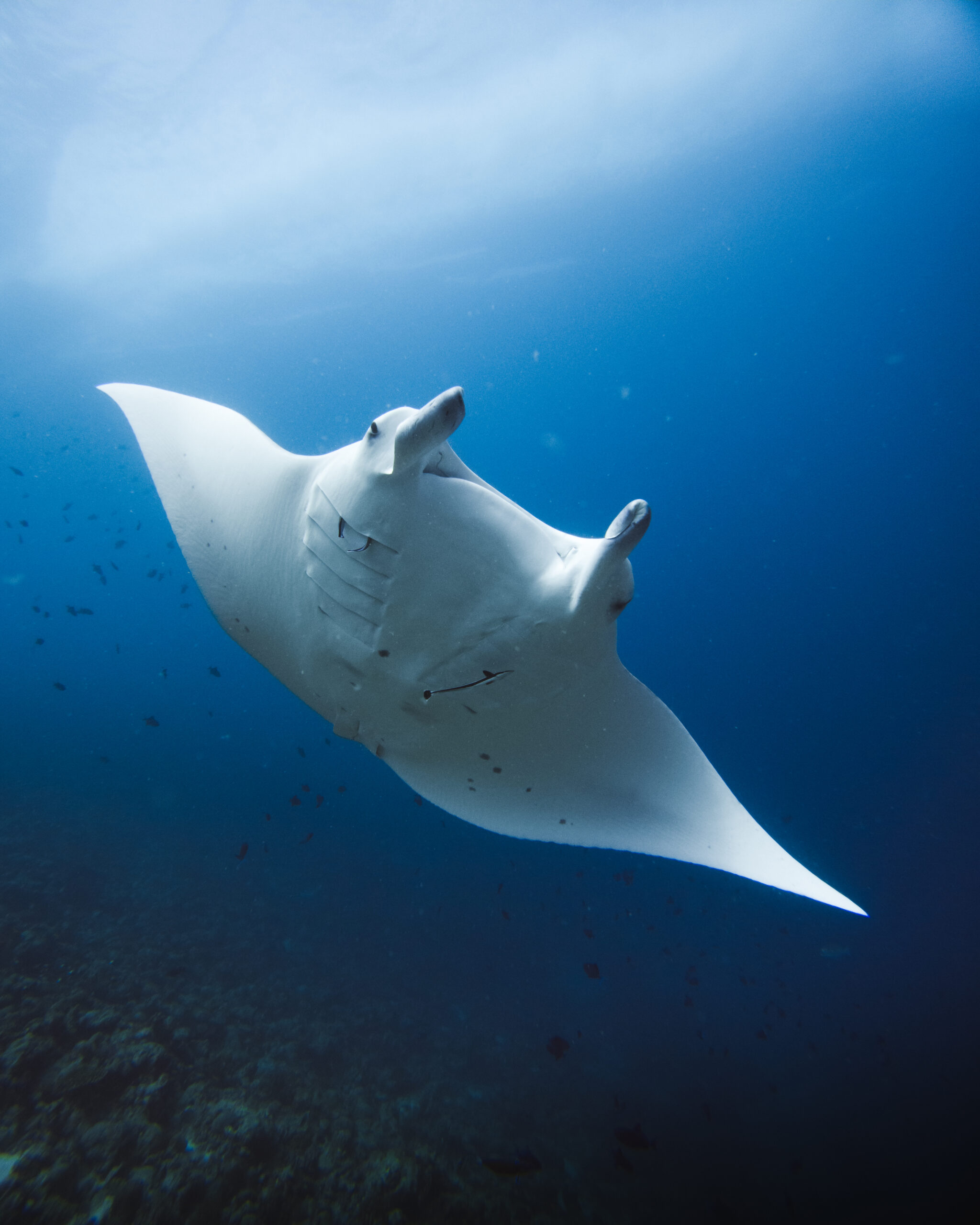
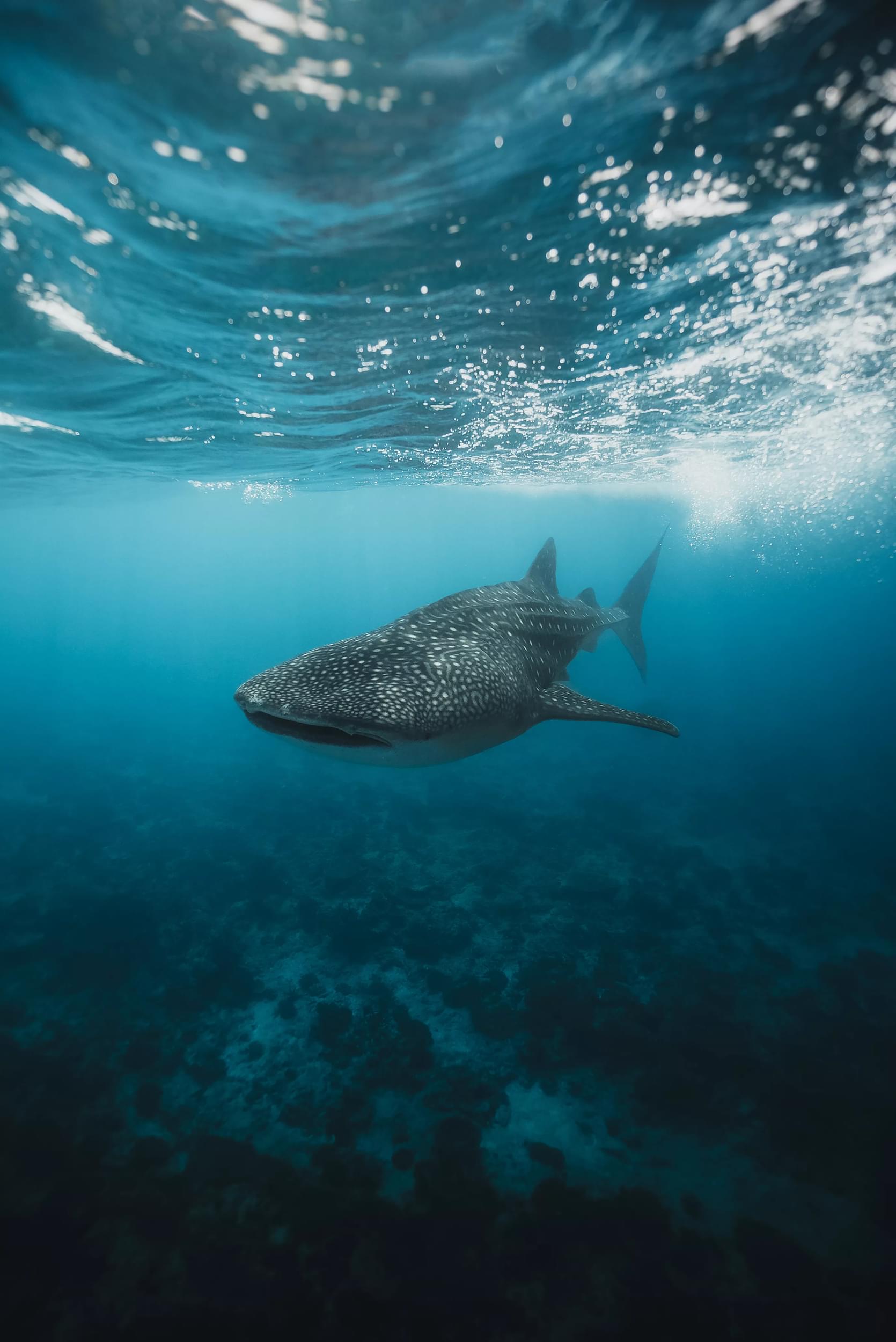
To encounter them is to witness grace on a scale rarely imaginable. Whale sharks, the largest fish on the planet, move with a serenity that belies their size. Up to 12 metres long, patterned in constellations of white across slate-grey skin, they drift through the atolls in search of plankton. There is no menace in them, no aggression — only a calm, ceaseless motion that makes their enormity all the more humbling. Manta rays, by contrast, are aerialists of the sea. With wingspans stretching five or six metres, they sweep and loop in movements so fluid they appear choreographed. When they gather in numbers, the ocean becomes a theatre of flight.
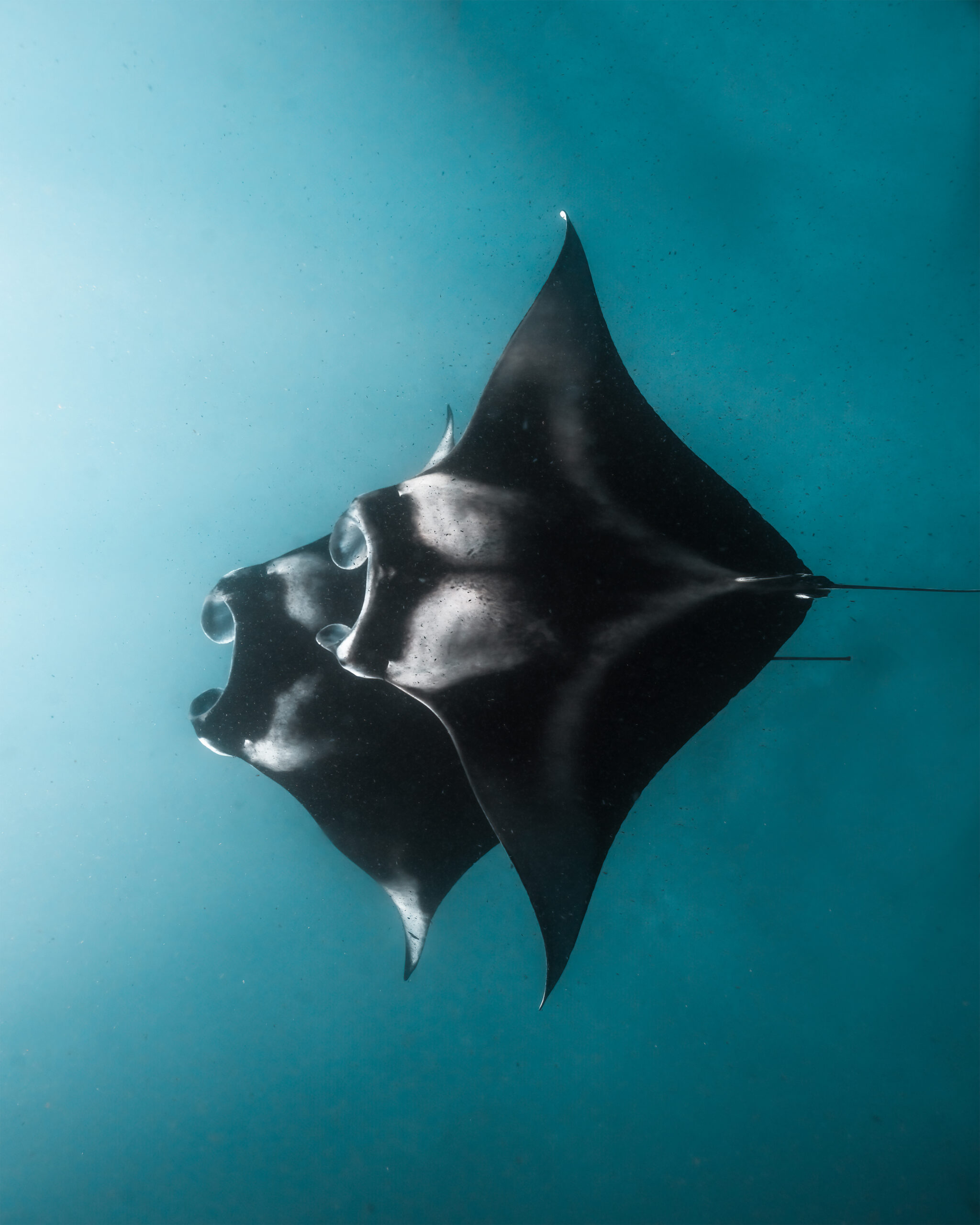
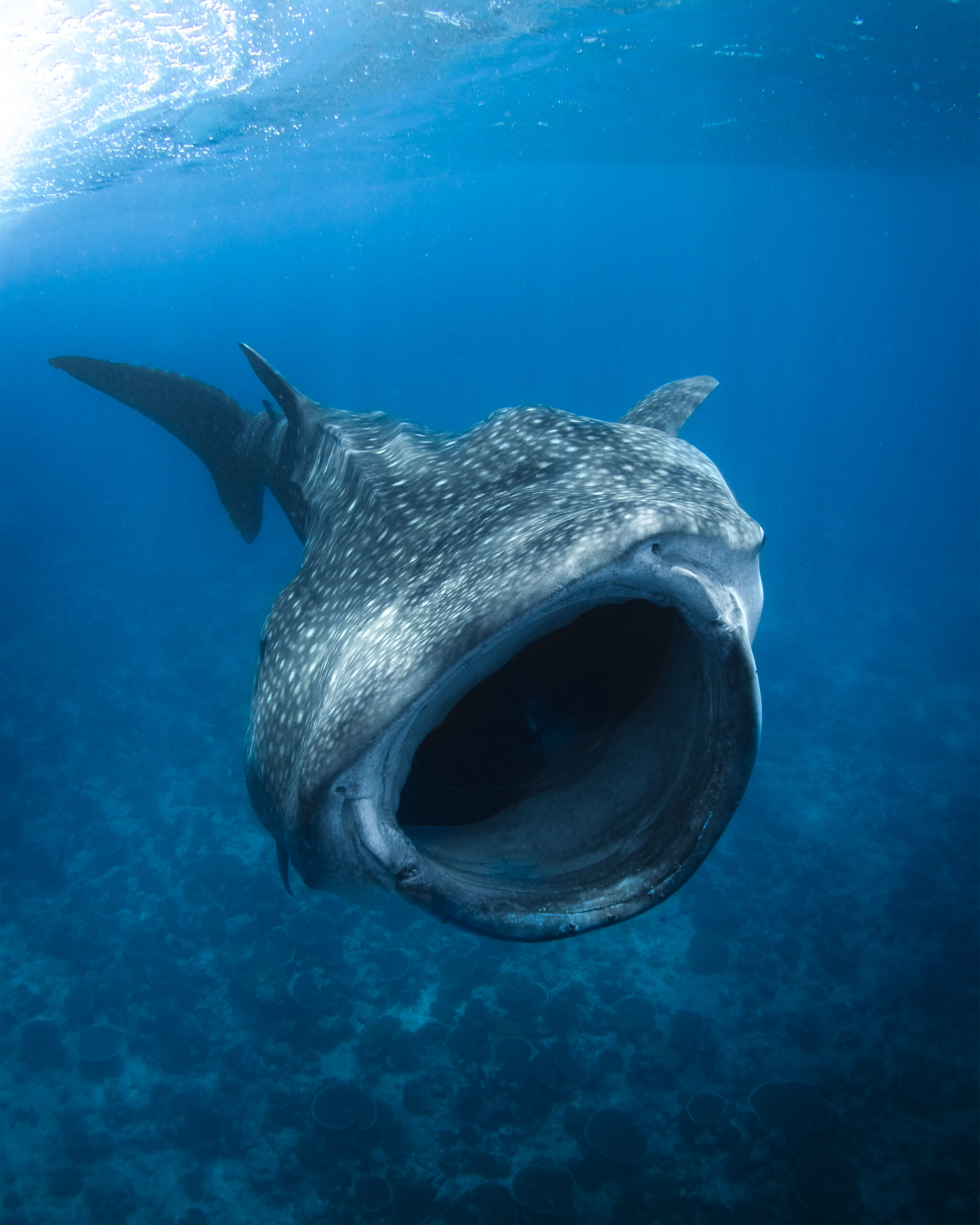
The Maldives is one of the few places in the world where such encounters are not exceptions but seasonal expectations. In South Ari Atoll, home to Villa Park, whale sharks are present year-round, gliding through plankton-rich waters that skirt the edge of the island. It is here, in the clarity of the winter season, that guests rise with the sun, board a dhoni, and find themselves swimming with shadows larger than any boat around them. The encounter is visceral: the sound of your own breath through the snorkel, the vastness of the creature beneath, the sudden awareness of your scale in the universe.
Baa Atoll, the setting of Royal Island, holds another marvel. Hanifaru Bay, a UNESCO Biosphere Reserve, is one of the planet’s most important manta aggregation sites. Between June and November, but often with striking clarity into the early winter, the bay becomes a funnel of plankton that draws mantas by the dozens, sometimes the hundreds. To drift in these waters is to float in a living constellation, wings sweeping above and below, their black-and-white patterns flickering in shafts of light. Guests describe it as a ballet without music, a choreography shaped by currents and instinct.
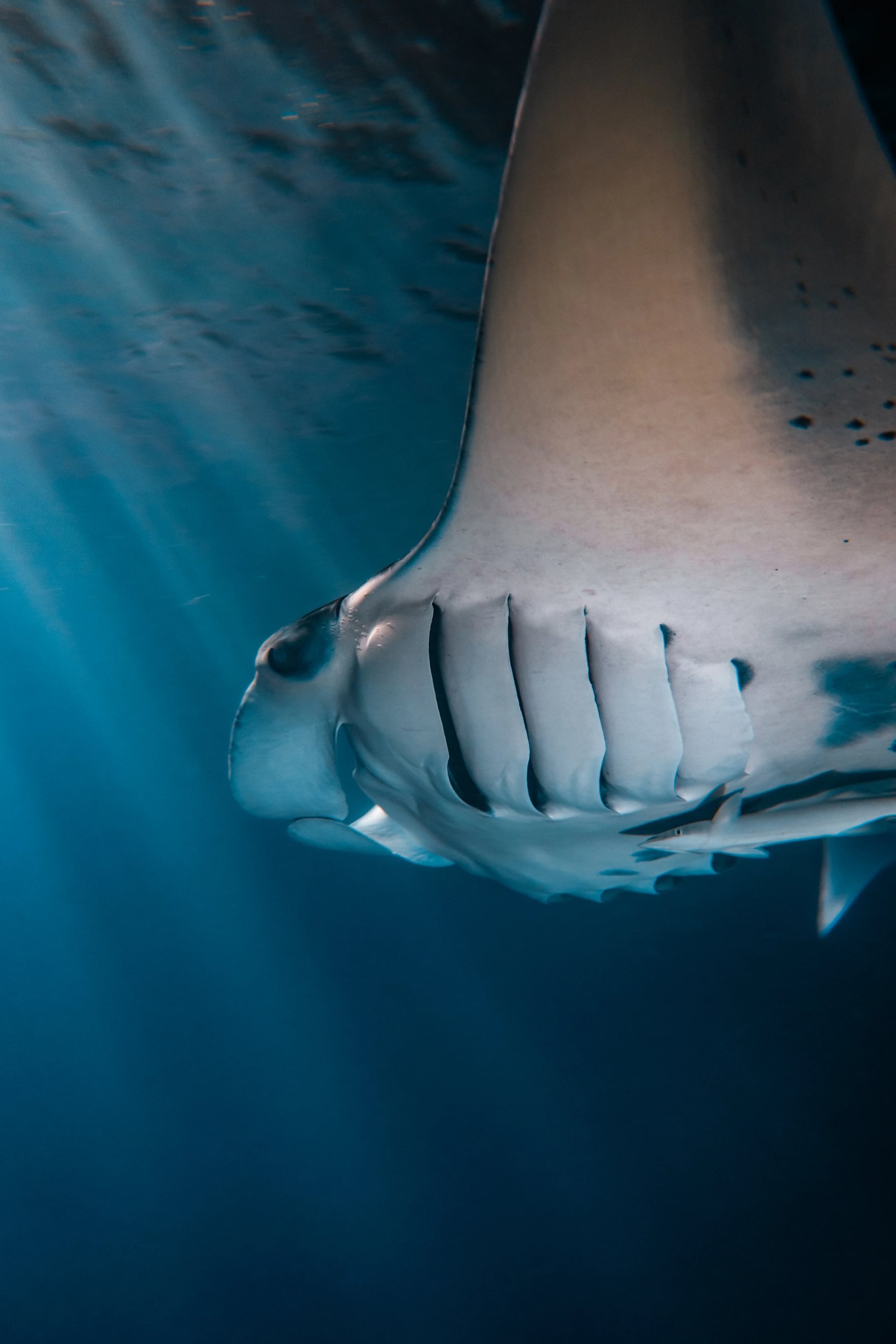
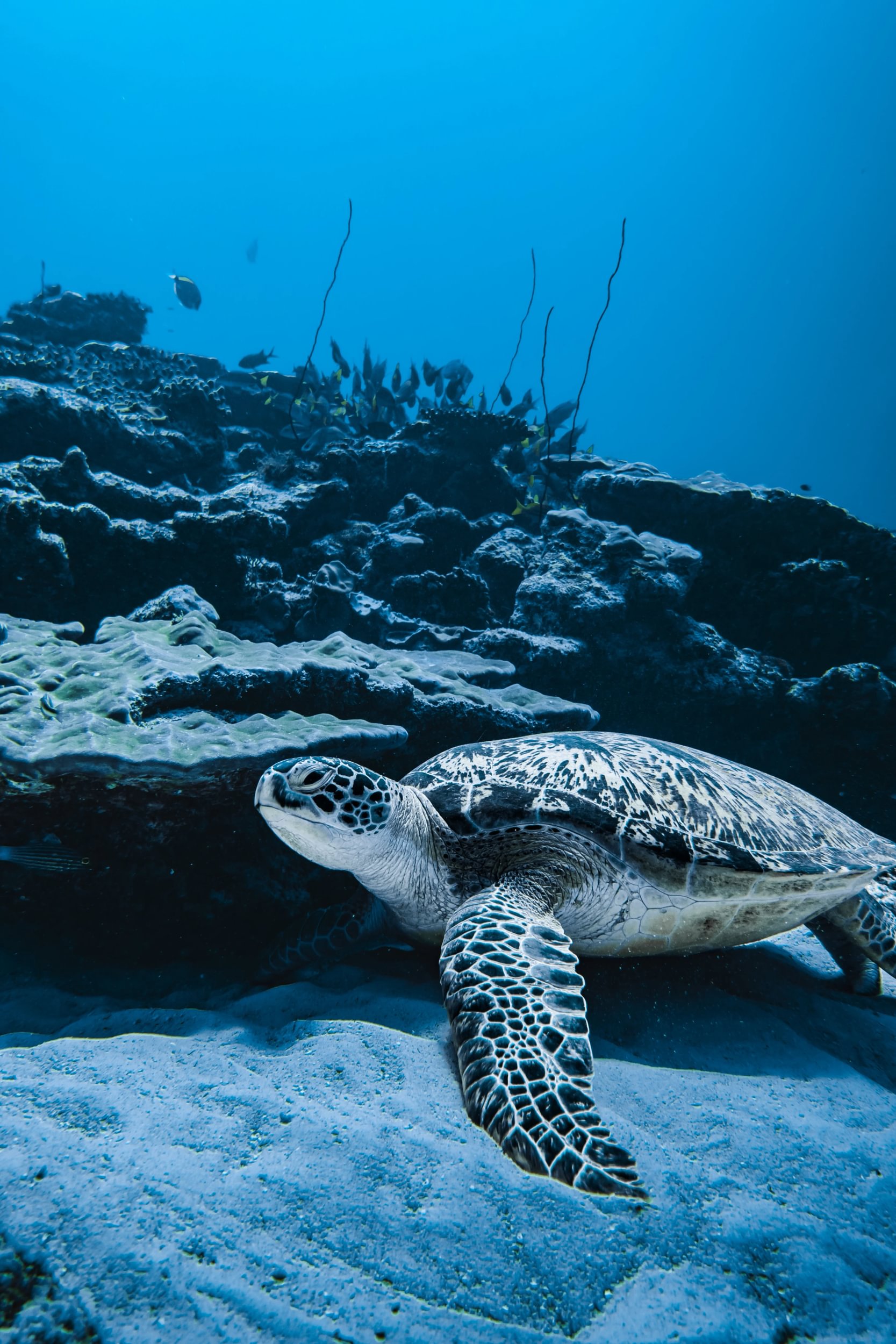
At Villa Resorts, these experiences are guided with reverence. Encounters are never staged, never forced. Marine biologists and trained guides lead the way, ensuring guests learn not only how to witness but how to protect. Briefings before excursions emphasise stillness: no touching, no chasing, no interruption of a creature’s natural rhythm. Conservation is embedded in the ritual. By observing responsibly, guests become participants in the preservation of the very wonder they have come to see.
The beauty of these encounters lies not only in the adrenaline but in the stillness after. Guests return to their villas, salt still drying on their shoulders, and find themselves quieter. There is a humility in having shared the sea with something so ancient and enduring. It lingers long after the dive mask is packed away.
For some, the Maldives is a place of beaches and sunsets. But for those who seek it, it is also a place where giants pass. To swim with whale sharks and manta rays is to brush against eternity, to understand the fragility and splendour of the ocean. And in winter, when the waters are clearest, the chance to witness them becomes not just a highlight, but the very essence of the Maldivian journey.
Related Posts
Solo Travel at Villa Nautica
Solo travel in the Maldives is not about proving anything. It is about space.…
An Island Guide to Becoming a Park Player
A four-day Villa Park family holiday through a child’s eyes, from beachside…
Royal Island Anniversary Itinerary: Three Nights vs Five Nights
Royal Island anniversary itinerary in Baa Atoll, Maldives: compare a 3-night…